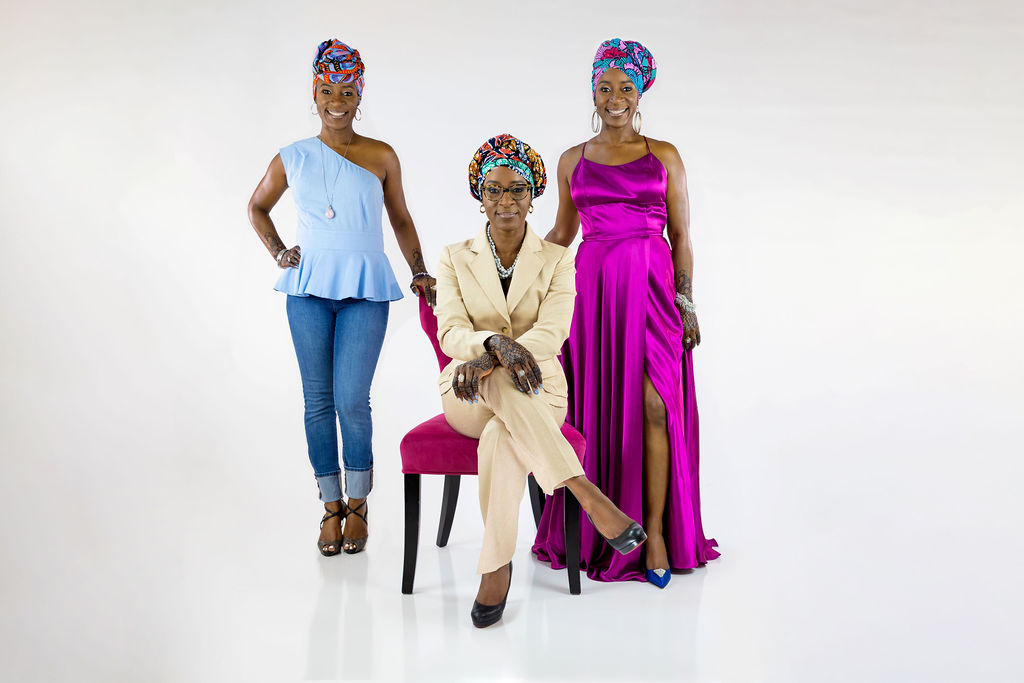
Head Wraps: Changing The Perception
Can I wear a headwrap to work? That was the question I asked myself back in the fall of 2017. I have always had a love/hate relationship with my hair. But the relationship had an additionally stressor, corporate America’s “unspoken” standards regarding hair and professional attire. Women in general struggle with their physical image in the corporate world but there is an added pressure on Black women in particular when it comes to hairstyles. If you ask any Black woman working in corporate America, if she has ever looked in the mirror and asked herself “Can I wear this hairstyle to work”, I am sure the answer would be yes.
I looked in the mirror and asked myself, “Is the headwrap appropriate for the workplace?”, “Is the headwrap too casual?”. As with many Black women, I consider my hairstyle choice more so than my outfit. People will notice my headwrap before my outfit. I can wear a designer suit but my headwrap can be deemed “inappropriate”, “against company policy”, or even “offensive.” But who sets these standards and why am forced to conform with a visual that does not reflect, or even consider, my cultural identity or my ability to express my personal style? More importantly why do I fear some sort of reprisal or reaction for my style choices? The solution, change the perception.
Thankfully recent legislation was passed to prohibit discrimination based on natural hairstyles. In the State of New York, the CROWN Act (an acronym for Creating a Respectful and Open World for Natural Hair) was passed in 2019 that outlaws racial discrimination based on natural hairstyles. That includes wearing Afros, braids, cornrows, fades, Bantu knots, twists and locs. While this is a progressive move towards change, it’s only a first step in changing workplace attitudes about hairstyle expression. But my story is how I turned headwraps into acceptable professional attire.
While home for the holidays, I decided that I would wear a headwrap everyday, including to the office. My present workplace is unique; the culture of the company is Muslim. I have female colleagues (including my supervisor) that wear hijabs for religious reasons. I wasn’t too concerned about wearing headwraps to the office, however I was concerned about how the headwrap would be perceived. While I have worn headwraps in social settings for years, I have never worn headwraps in professional settings. First, I asked myself the
following questions:
“Is a headwrap professional attire?”
“Is a headwrap perceived differently from a hijab?”
“What questions will I be asked about the headwrap?”
“ What statement am I making with the headwrap?”
In spite of the questions, I knew that I could make the headwrap “professional attire.” At the time, I didn't realize how this journey would change my life because my goal again, was to change the perception of headwraps. Headwraps are often seen as a casual accessory that is worn on vacation but certainly not in corporate America. I’ve never seen images of women wearing headwraps in any corporate publication or website. Therefore, my second step involved research.
Headwraps date back to the 1800s and directly related to slavery. Enslaved women were forced to cover their hair. Additionally, headwraps were a symbol of inferior status and associated with images of “mammies” and “Aunt Jemima”. From 1930s-1970s Black Hair experienced a variety of changes from chemical pressed hair to Afros. The headwrap remained a part of the culture but was rarely worn in public. In the 1980s and 1990s, headwraps gained some positive visibility with the rise of hip-hop. Outside of the United States and in most African cultures headwraps are worn daily. Since Houston has a large Nigerian population, I focused my research specifically on Nigeria where, a formal headwrap is called a Gele. The Gele is worn for special occasions like weddings. I knew immediately that my headwrap would be associated with the Gele. However, I accepted that I might have to explain the difference between the Gele and a headwrap and make sure that I did not misrepresent the Gele.
My third step involved giving myself permission to lead the way. Black women have always been at the helm of change in this country. We have repeatedly proved ourselves to be more than capable leaders. Although I was leading a personal movement, I knew that I still had challenges ahead of me. I realized that the biggest obstacle I faced was the historical perception of headwraps. I knew my personal style statement could invoke curiosity and perhaps some resistance. To mange these challenges, I referred to the Bible passage about putting on the full “Armor of God to be able to stand against the wiles of devil”. My strength and passion for my headwrap journey came from God, my history, my pride and my armor of confidence.
The first time wearing a headwrap to the office required a bit of planning. I wanted to make a great first impression, set the tone of professionalism. It was key for me to change the perception from inferior to equal. At my office, attire is considered casual, business casual, smart casual, etc. However the definition for business attire is universal. Therefore, for the first week, I decided to wear a suit every day. Next I began to think of coordination and color. I wanted my headwrap to compliment my suit. Although I felt a bit self – conscious on the first day, I also felt a strong sense of pride. Wearing a headwrap for one week, turned into months, followed by years. Now headwraps are a part of my life and have become my signature style.
Headwraps have become part of my lifestyle, beyond corporate America. I wear headwraps to galas, formal events, church events, sorority meetings, the list is endless. I even updated my professional profile picture to a headshot with me in a headwrap. Beyond style, I ultimately want to instill confidence in the next generation of young Black women. Will headwraps be acceptable in all industries? Perhaps not, but I’m doing my part to change the perception.
Pamela